Skip to content

Expert Dry · Decision-making

A Sawzall is not a diagnostic instrument.

On unnecessary demolition, and why “how fast can we tear it out?” is the wrong first question.

I sometimes use an admittedly exaggerated analogy when talking about unnecessary demolition.

Suppose you went to a physician with an uncomfortable spot on your arm.

The doctor looked at it for a few seconds and said, “That may be cancer. We need to amputate your arm today.”

I suspect most of us would have a few questions.

  1. Can we test it first?
  2. Is there something less drastic we can try?
  3. Can we determine what it is before we decide we can’t reverse?

Now, before somebody writes me an angry email, I know perfectly well that removing drywall is not the same thing as removing an arm. Drywall can be replaced. Arms, so far anyway, cannot.

The comparison is about the decision-making process.

If a building material gets wet, my first question has never automatically been, “How fast can we tear it out?”

The questions I actually ask

  • What got wet?
  • How wet is it?
  • How long has it been wet?
  • What Category of water was involved?
  • Can we get to it?
  • Can we create drying conditions that will work?
  • And most importantly, is the material responding to drying?

Sometimes the answer is no. Sometimes material absolutely needs to come out.

I have torn out wet building material during more than 25 years in this business.

But removal should be a conclusion we reach after evaluating the conditions—not necessarily the first thing we do because demolition is faster or easier to understand.

Once you tear something out, you’ve already made the decision.
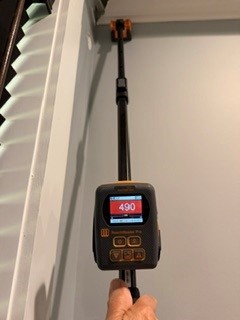
A hand holds a moisture meter on a telescoping pole against intact drywall near the ceiling. The meter display reads 490 in red.
Measure the wall before you decide it has to come out.

I’d rather measure first.

Give appropriate materials a reasonable opportunity to dry when conditions allow it. Then make the decision.

A Sawzall is a very useful tool. It just shouldn’t be the diagnostic instrument.
Michael Conroy

850-777-6655
CIEC, Master Restorer
Florida Mold Assessor MRSA 2103
Florida Mold Remediator MRSR 1743
expertdry.com

Expert Dry® / Mike Conroy Consulting

We Dry Wet Buildings®

Dry Out Without the Tear Out®

Questions people ask before the Sawzall comes out

Does wet drywall always have to be removed?

No. Wet does not automatically mean tear it out. Drywall can be replaced, but removal should be a conclusion you reach after evaluating the conditions, not the first thing you do because demolition is faster or easier to explain.

What should you check before tearing out wet building materials?

What got wet. How wet it is. How long it has been wet. What category of water was involved. Whether you can reach it. Whether you can create drying conditions that will work. And most importantly, whether the material is responding to drying.

When does wet material actually need to come out?

Sometimes it does. If the material is not responding to drying, or the conditions will not let it dry in place, removal is the right call. That decision belongs after the measurements, not before them.

Why compare demolition to amputating an arm?

It is an exaggerated analogy about the decision, not the material. An arm cannot be replaced. Drywall can. Most people would still ask a doctor to test first, try something less drastic, and identify the problem before doing something that cannot be undone. Once the wall is cut open, the decision has already been made.

Is a Sawzall the right first tool on a wet wall?

A Sawzall is a useful tool. It is not a diagnostic instrument. Measure first. Give appropriate materials a reasonable chance to dry when conditions allow it. Then decide.